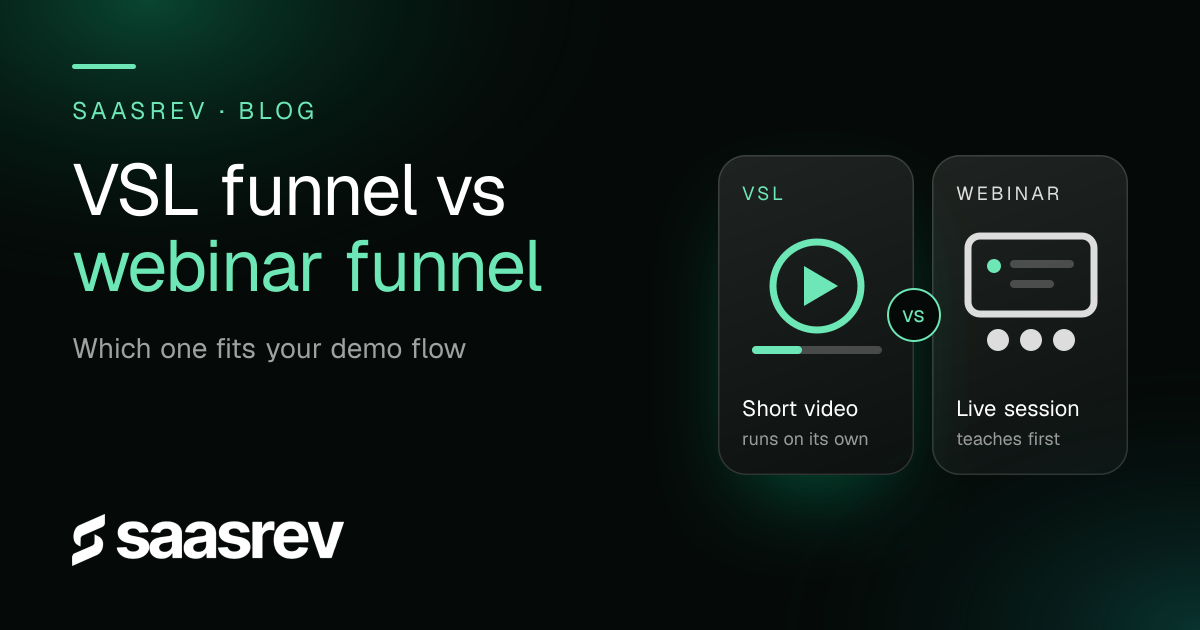
A VSL funnel uses a short recorded video to prepare a buyer to book a demo, and a webinar funnel uses a longer session that teaches before it pitches. Choose a VSL funnel when your offer is clear and you want a funnel that runs without a host. Choose a webinar funnel when the product needs teaching or buyers want to ask questions live. This post compares the two for B2B SaaS demos, shows where each fits and says which numbers decide.
What is the difference between a VSL funnel and a webinar funnel?
The video is the difference. In a VSL funnel, traffic lands on a page with a short video sales letter that explains the problem, your approach and what a call covers. The buyer then answers a few questions and books. We describe the full flow in what a VSL funnel is for SaaS.
In a webinar funnel, traffic lands on a registration page for a longer session, live or recorded, that teaches something useful first and presents the offer near the end. The buyer then books a call or starts a trial. The teaching builds trust, and the live version lets people ask questions.
How does a VSL funnel vs webinar funnel compare side by side?
| VSL funnel | Webinar funnel | |
|---|---|---|
| Format | Short recorded video | Longer session, live or recorded |
| Buyer effort | A few minutes | Usually much longer, plus registering |
| Interaction | None, apart from the questions that follow | Live questions in the live version |
| Effort to run | Record once, runs on its own | Topic, slides and a host, plus attendance for live sessions |
| Best at | Preparing and filtering buyers for a call | Teaching a complex idea and building trust |
| Main risk | Attracts people who watch and do not fit | Fewer sign-ups, and some drop out before the end |
| Judge it by | Qualified demos and pipeline | Qualified demos and pipeline |
The last row is the same for both, and it matters most. A funnel is working when it lowers your cost per qualified demo, whatever the format.
When does a VSL funnel fit a SaaS demo flow?
A VSL fits when your offer is easy to state and you can say what you do for whom in a few minutes. It suits a small team that wants an always-on funnel, since you record the video once and it keeps working. It also suits a case where your problem is that calls are full of poor fits, because the video and the questions after it filter people before they reach the calendar.
The trade-off is a lower count of raw bookings, since some visitors screen themselves out. If your problem is too few visitors, a VSL will not fix it. We go through the trade-off in more detail in what a VSL funnel is for SaaS, and you can see how we build them on our VSL funnels for SaaS page.
When does a webinar funnel fit better?
A webinar fits when buyers need to learn something before a demo makes sense. That might be a new category they have not bought before, a technical product with a lot to explain, or a deal with several people involved who each want to ask a question.
It also fits when you have someone who can host well and a topic you can teach in a way that helps even people who never buy. Live sessions let you answer objections as they come up, which a recorded video cannot do. The cost is more effort per session and a smaller number of people willing to give up the time.
Can you use both?
Yes, and many teams end up with both once one of them is working. A short video can carry cold traffic to a booking step, and a webinar can serve the buyers who need more depth before they will commit. A recorded webinar can also run as an always-on asset after the live session.
Start with one. Two new funnels at once make it hard to see which one is working, and they split your attention. Get the first booking qualified demos, track it to revenue, then add the second for a clear reason.
How do you choose between them?
Answer four questions about your own situation.
- Can a buyer understand your offer in a few minutes? If yes, lean toward a VSL.
- Does the product need teaching before a demo makes sense? If yes, lean toward a webinar.
- Do you have someone who can host and a topic that helps people in its own right? If not, a VSL is easier to deliver well.
- How much effort can your team put into each session? A webinar asks for more of it.
If your answers point both ways, run a small test of each against the same audience and compare cost per qualified demo. The sources we read disagree on which format converts better, and none gives head-to-head data we would trust, so your own test is the best evidence you can get.
How do you measure either one?
Measure every step and not only the last one. For a VSL, track watch rate, completion of the questions, booking rate and show rate. For a webinar, track registrations, attendance, how long people stayed, bookings afterward and show rate. Then compare cost per qualified demo and the pipeline each produces.
The pages around the video matter too, since a weak booking step wastes a good one. We cover that in what to put on a B2B SaaS landing page that books demos and in how to reduce demo no-shows. If cost per demo is the number that hurts, read how to lower SaaS CAC.
Where have we used a VSL funnel?
We build VSL funnels, so our view leans that way, and you should weigh it with that in mind. KBS Media used a VSL funnel with paid ads and went from $0 to $30K MRR in 30 days. You can read more in our case studies.
That result comes from one engagement and depends on the company's product, market, budget and sales process. It is not a guarantee, and it says nothing about webinar funnels. See our Terms of Use for details.
If you are not sure which format fits your offer, book a strategy call and we will look at your funnel with you.
Frequently asked questions
Is a webinar funnel better than a VSL funnel for SaaS?
Neither wins in general. The sources we found disagree, and none shows head-to-head conversion data we would trust. A webinar can build more trust and answer questions live, and a VSL is shorter to produce and runs without a host. Test the one that fits your offer.
Can I use both a VSL and a webinar?
Yes. A short video can bring cold traffic to a registration or booking step, and a webinar can then serve buyers who need more depth. Start with one, get it booking qualified demos, and add the second only when you have a clear reason.
How long should a SaaS webinar be?
Long enough to teach one thing well, and no longer. Plan the content around one problem your buyers have, give the answer first, and leave time for questions. There is no ideal length that suits every product.
Which one costs less to run?
A VSL usually takes less ongoing effort, since you record it once and it runs on its own. A webinar needs a topic, slides, a host and often live attendance, unless you run it as a recording. Compare the cost per qualified demo and not the cost of making the asset.