Choros AI is a B2B SaaS platform with a product enterprise buyers wanted. It ran two growth motions at the same time: product-led growth (PLG) for small accounts and sales-led growth (SLG) for enterprise deals. The two motions were not aligned, and they were getting in each other's way.
What was the problem?
Four things were broken.
- Self-serve and enterprise shared one funnel. Both used the same ads, the same messaging and the same landing pages. Enterprise buyers landed on a "start free trial" page built for small teams. Small teams booked enterprise demos they were never going to buy.
- The ads brought interest, not enterprise buyers. The creative was generic ("automate your workflow") and ignored what enterprise buyers ask about first: security, compliance, integration and how long implementation takes. Cost per lead was low, at $40 to $60, but only about 40% of booked demos were real enterprise buyers.
- The funnel leaked between demo and close. Show rate was 45%. Demos were booked 5 to 7 days out, there was no pre-call education for enterprise prospects, and deals were run through a single contact. The average sales cycle was 60 days and the enterprise close rate was about 20%.
- The targeting was too broad. Sales spent a large share of its time on unqualified calls, so the enterprise pipeline was buried in noise and hard to forecast.
What did SaaSRev change?
We rebuilt the enterprise acquisition system in four steps.
- Two funnels, fully separated. Self-serve got its own ads, message ("start a free trial in five minutes") and sign-up flow. Enterprise got its own ads, its own landing page and its own booking calendar. Ad budget was split by revenue goal, about 70% to enterprise and 30% to self-serve.
- Enterprise-specific ads and pages. We built a steady stream of enterprise ad concepts around security reviews, rollout across departments and return on investment for senior buyers. Targeting was limited to director level and above at companies with 500 or more employees. The landing page carried security documentation, case studies and implementation details.
- A tighter demo flow. A person called every enterprise booking within five minutes, and the booking window shrank from 5 to 7 days to 48 to 72 hours. Prospects got a pre-call video that answered the usual enterprise questions. On the first demo, the team asked who else should be involved and booked those stakeholders in week one. Security documents, SLA templates and an ROI calculator were ready before legal or procurement asked.
- Self-serve as a feeder. Usage signals on self-serve accounts, such as a growing user count and requests for single sign-on, triggered a handoff to the enterprise team.
What were the results?
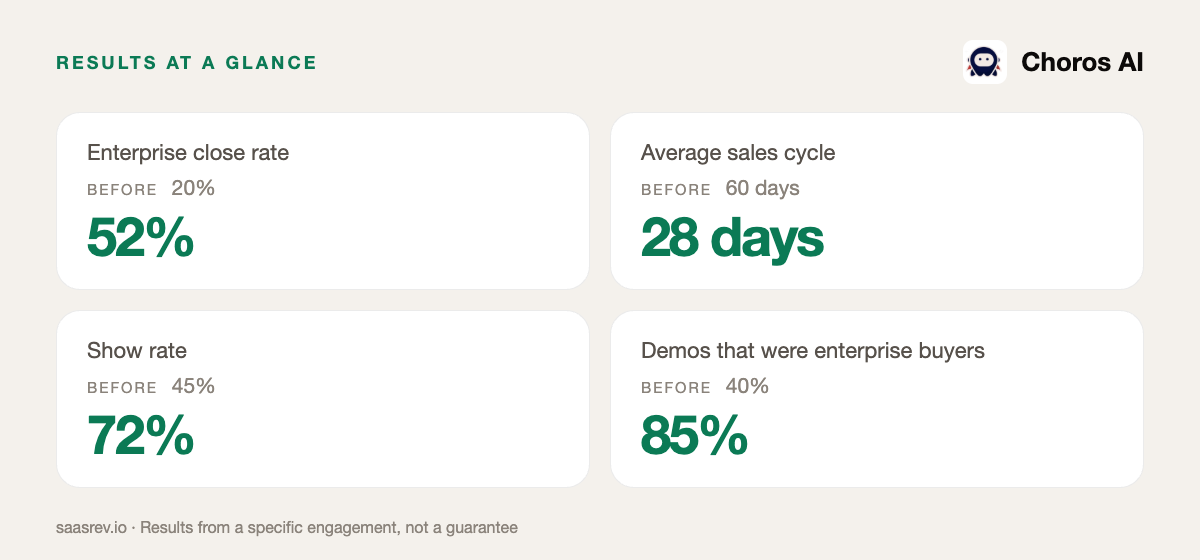
| Metric | Before | After |
|---|---|---|
| Show rate | 45% | 72% |
| Enterprise close rate | About 20% | 52% |
| Average sales cycle | 60 days | 28 days |
| Booked demos that were qualified enterprise buyers | About 40% | 85% |
Cost per lead for enterprise ran higher, at $180 to $220, against $40 to $60 for self-serve. That was the point. Enterprise contracts at Choros run from $50K to $150K or more a year, so cost per lead matters far less than the quality of the lead.
Choros closed 60 enterprise deals, and 30% of enterprise deals came from self-serve accounts that grew into enterprise plans.
What does this case show?
Self-serve and enterprise buyers do not buy the same way, so they should not share a funnel. Once the two were separated and the enterprise flow was built for enterprise questions, the same company closed more deals, in half the time, from better-qualified calls.
If you sell to larger accounts, read how to get more demos for B2B SaaS, or see how we run paid acquisition for SaaS.
Common questions
How much did Choros AI's enterprise close rate improve?
It rose from about 20% to 52%, while the average sales cycle fell from 60 days to 28 days.
Why did Choros AI separate its self-serve and enterprise funnels?
Small teams and enterprise buyers buy differently. With one shared funnel, only about 40% of booked demos were enterprise buyers. After the split, 85% were.
Why was enterprise cost per lead higher?
Enterprise leads cost $180 to $220 against $40 to $60 for self-serve, but enterprise contracts at Choros run from $50K to $150K or more a year, so lead quality matters more than lead cost.
This is the result of a specific engagement. It depends on the company's product, market, budget and sales process, and it is not a guarantee. See our Terms of Use for details.